

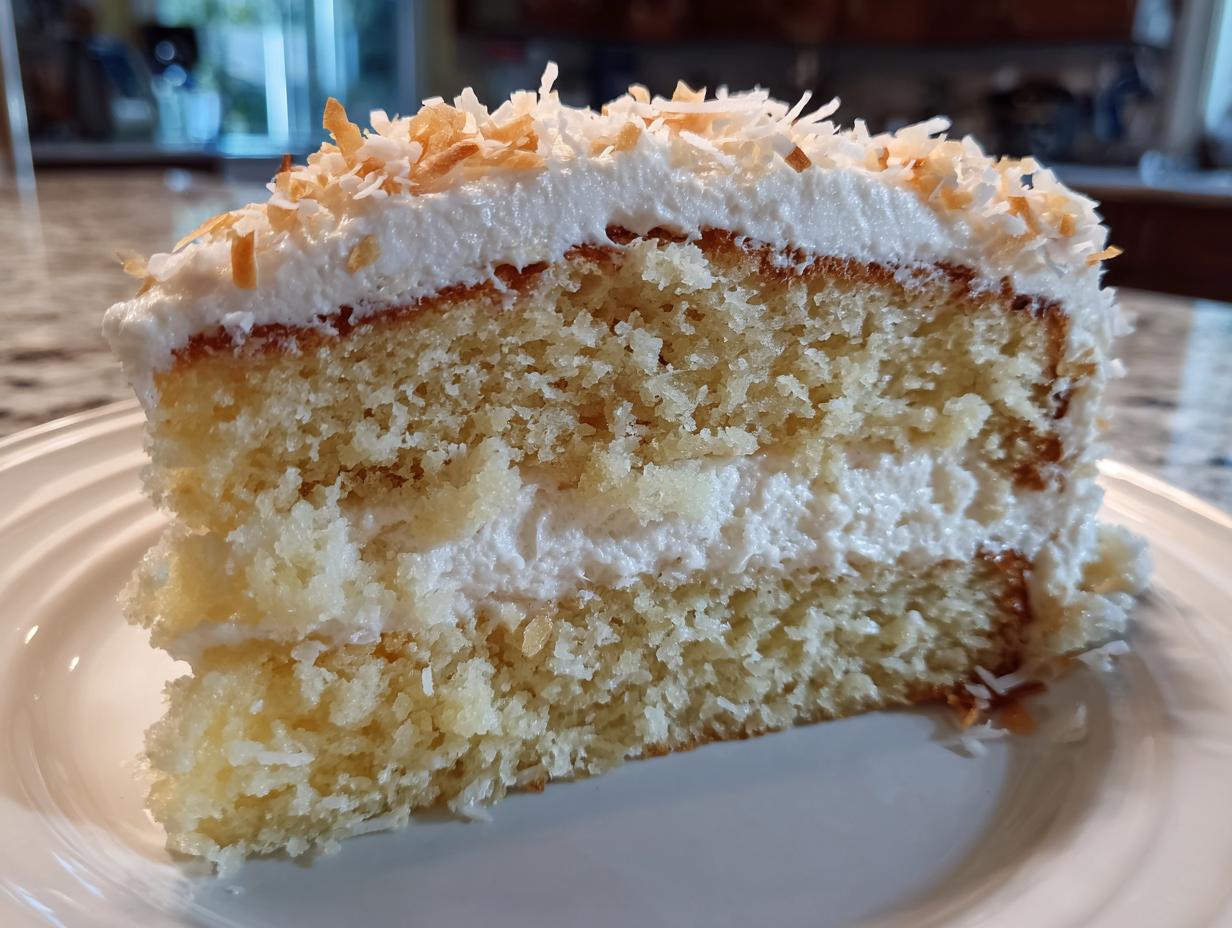
Oh, that scent! You know the one, right? That warm, sweet, unmistakable perfume of coconut mingling with vanilla and fresh sugar that just screams celebration. For me, making a truly classic coconut cake recipe taps right into some deep memory bank. I remember thinking I could never handle something this delicate—a perfectly moist coconut cake from scratch seemed reserved for those fancy Southern bakeries. But I was wrong! After years of baking disasters, I finally cracked the code for what I now confidently call The Best Moist and Fluffy Old-Fashioned Coconut Cake Recipe. I’m Ava Sinclair, and if I—a former takeout addict—can master this incredibly decadent coconut cake, you most certainly can too. This is the recipe that proved to me that amazing food is totally achievable right here in my own kitchen.
- Why This Old-Fashioned Coconut Cake Recipe Delivers Moisture and Flavor
- Gathering Ingredients for Your Coconut Cake Recipe
- Step-by-Step Instructions for the Best Coconut Cake Recipe
- Tips for Success with Your Coconut Cake Recipe
- Serving Suggestions for This Decadent Coconut Cake
- Storage and Reheating for Your Coconut Cake
- Frequently Asked Questions About This Coconut Cake Recipe
- Nutritional Snapshot of This Homemade Coconut Cake
- Share Your Experience Making This Coconut Cake Recipe
Why This Old-Fashioned Coconut Cake Recipe Delivers Moisture and Flavor
There’s a huge difference between a dry, crumbly cake and a truly moist coconut cake, and this recipe walks the line perfectly. When I first tried mastering a classic southern coconut cake recipe, everything came out stiff. It wasn’t until I focused on treating the ingredients with calm patience that the magic happened. I finally got that light, fluffy texture when I stopped rushing the creaming stage. That’s the soul of this recipe you’re looking at—it’s designed for real home cooks who want bakery results without the fuss. If you’re looking for a tropical cake that stays perfectly soft for days, this is your winner. Trust me, this one is different.
Key Elements for a Fluffy Coconut Cake from Scratch
Getting that signature fluffiness doesn’t require secret equipment; it just needs a little technique consistency. First, room temperature butter, eggs, and milk are non-negotiable. They combine smoothly without getting angry at each other. Second, we’re mixing the dry texture—flour and sugar—into the butter until it looks like coarse sand before adding liquids. This step creates the tiny air pockets that give us that light structure. If you follow those two steps, like Julie Marie’s wonderful take on it, you’re already halfway to success!
Gathering Ingredients for Your Coconut Cake Recipe
Okay, now for the fun part! One of the best things about this specific coconut cake recipe is that you don’t need to hunt down specialty items. We are keeping this accessible—all the magic comes from standard grocery store finds assembled with a little love. Before you start, just remember that for the cake layers, making sure your butter, eggs, and milk are at room temperature makes a huge difference in getting that smooth, uniform batter you need.
Ingredients for the Moist Coconut Cake Layers
You’ll need the full list here to ensure you get that deeply satisfying moisture. If you often look up vanilla buttercream recipes, many of these base ingredients will look familiar, but the coconut milk is our secret weapon here!
- 1 3/4 cups all-purpose flour
- 1 3/4 cups granulated sugar
- 1 tablespoon baking powder
- 1/2 teaspoon salt
- 1 cup unsalted butter, softened
- 4 large eggs, room temperature
- 1 cup whole milk, room temperature
- 1/2 cup coconut milk (must be full fat for the best richness)
- 2 teaspoons vanilla extract
- 1 teaspoon coconut extract
- 1 cup sweetened shredded coconut (this goes right into the batter!)
Ingredients for the Creamy Coconut Frosting
This frosting is what truly makes it sing! The cream cheese keeps the texture beautifully light while adding that slight tang we all love for a perfect creamy coconut frosting experience.
- 1 cup cream cheese, softened
- 1/2 cup unsalted butter, softened
- 4 cups powdered sugar, sifted (don’t skip the sifting!)
- 1 teaspoon coconut extract
- 1/4 cup heavy cream
- 1 1/2 cups sweetened shredded coconut, toasted (for coating the outside)
Step-by-Step Instructions for the Best Coconut Cake Recipe
Now that we have our ingredients ready, let’s get baking! This process is straightforward, but I want you to pay attention to the mixing. Overmixing is the downfall of so many great layer cakes like this one. If you’re curious about general mixing fundamentals, take a peek at my guide on simple vanilla cake recipes, but for now, let’s focus on making this tropical dream come true. Remember to be gentle, and we will end up with the most delightful homemade coconut cake.
Preparing the Cake Pans and Mixing the Batter
First things first: get that oven heating up to 350°F (175°C). You need to grease and flour two 9-inch round pans, and this is where I always cheat a little and cut parchment circles to line the bottoms—it’s an easy insurance policy! In your biggest bowl, whisk together the flour, sugar, baking powder, and salt. Next, add the first portion of softened butter and beat it on low speed. Don’t rush this part! You want this mixture to look exactly like coarse sand; that’s the base for our light texture.
In a separate bowl, we mix our wet ingredients: eggs, whole milk, coconut milk, vanilla, and coconut extract. Slowly add these wet things to your sandy butter mixture, mixing on medium speed only until it comes together. Seriously, stop mixing as soon as everything is incorporated! Then, gently fold in that cup of sweetened shredded coconut. We are building flavor here, not gluten!
Baking and Cooling the Fluffy Coconut Cake Layers
Divide that beautiful batter evenly between your two prepared pans. Pop them into the oven and bake for 30 to 35 minutes. You know it’s done when a toothpick stuck in the center comes out clean—no wet batter clinging to it, please! Let them cool in the pans for about 10 minutes. This short cooling time is crucial; if you try to haul them out immediately, they tend to break. Once they’ve firmed up a bit, invert them onto a wire rack and let them cool *completely*. I cannot stress this enough: frosting warm cakes is how you end up with a runny, sad mess, and we are making a stunning best coconut cake recipe here!
Making the Creamy Coconut Frosting
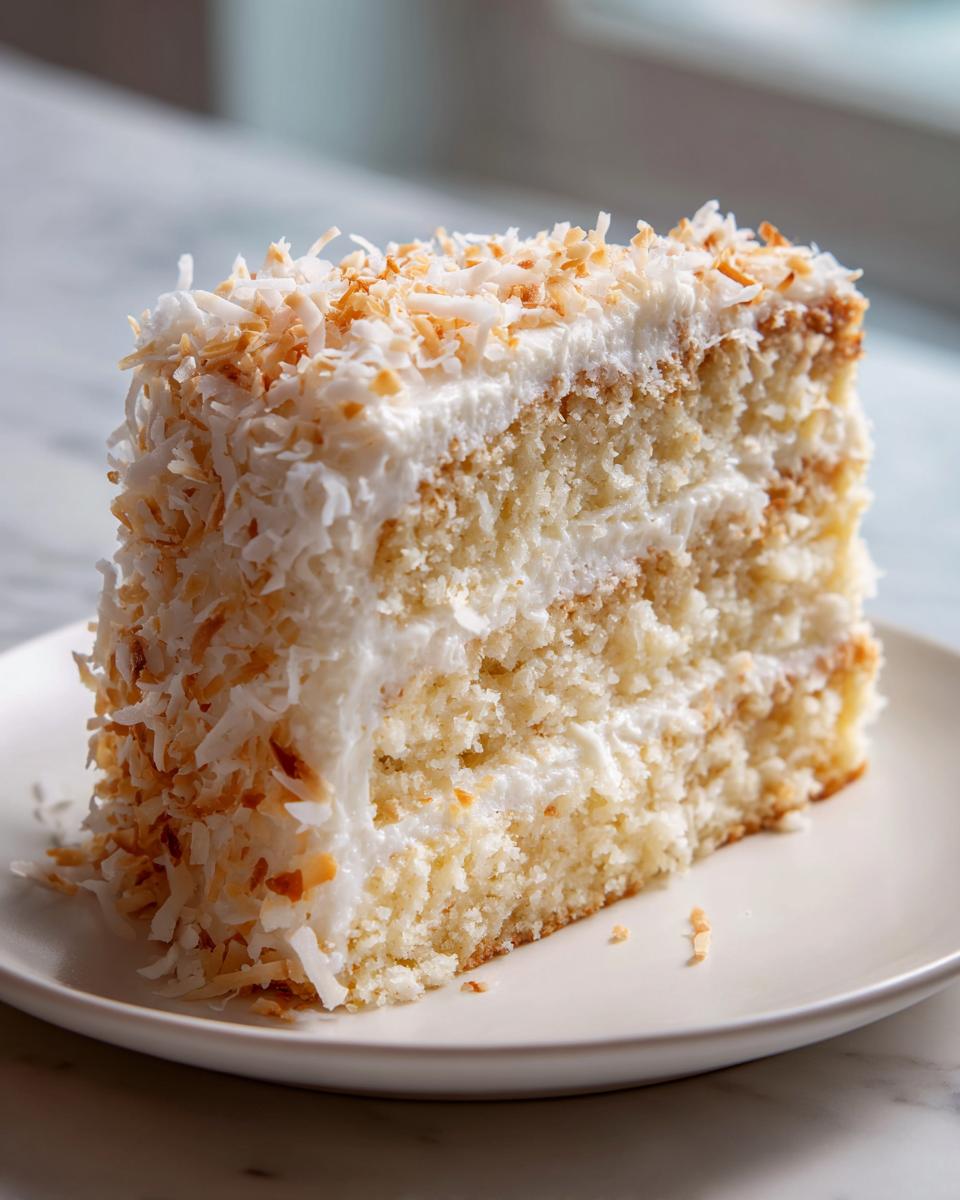
While your layers are cooling down—thank goodness for that resting time—we whipped up the frosting. For the best coconut cream cheese frosting, beat your softened cream cheese and butter together until they are undeniably smooth. No lumps allowed! Once you have that smooth base, slowly add the sifted powdered sugar, mixing low at first so you don’t create a sugar cloud in your kitchen. Then, you can increase the speed. Finally, beat in the coconut extract and the heavy cream until everything is light and super fluffy. This will be rich and tangy!
Assembling Your Homemade Coconut Cake
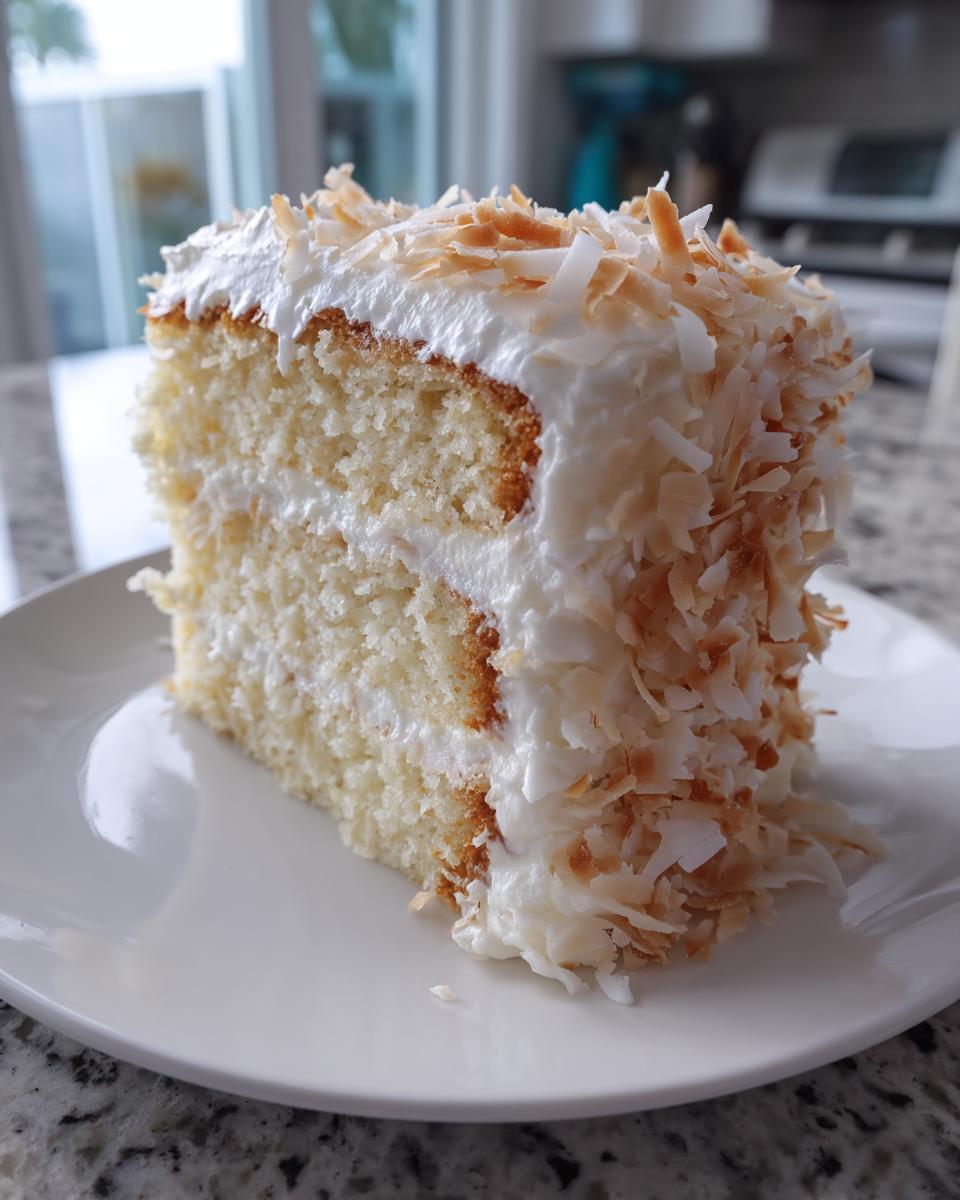
This is where it all comes together! Take that first cooled layer, and give it a generous, thick coat of frosting. Don’t be shy; this is where the moisture sinks in! Set the second layer right on top. Next, you’ll frost the top and then carefully cover the entire outside—top and sides—with the remaining creamy coconut frosting. For the grand finale, take those toasted coconut shreds and gently press them all over the sides of the cake. I stack the rest on top for a lovely high crown. If you want to see how other people manage their beautiful cakes, check out the amazing inspiration over at Bake and Savor!
Tips for Success with Your Coconut Cake Recipe
When you’re making an easy coconut cake like this for a big event, you want zero surprises! Because I’ve made this recipe more times than I can count—sometimes rushing the prep because life happens—I’ve learned a few small tricks to guarantee perfection every single time. It’s all about these little details that separate a good cake from an unbelievable one. Don’t worry about substitutions for the main batter ingredients; they are set in stone for that perfect fluffy texture, but we can adjust textures on the outside! If you ever need a go-to savory pairing, check out my tips for an easy whipped ricotta dip, but for now, let’s talk coconut!
Achieving Perfect Toasted Coconut
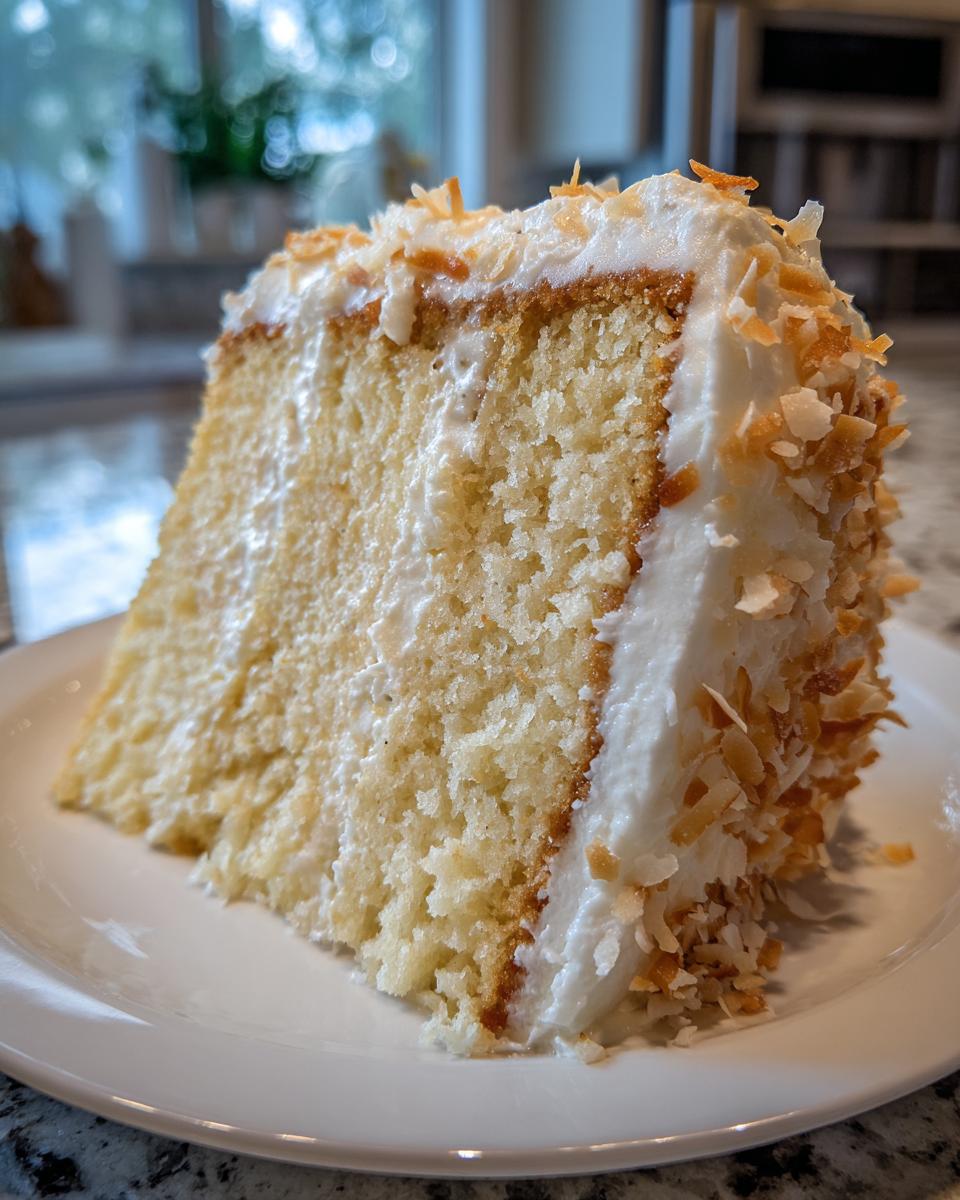
That toasted coconut coating isn’t just for looks; it adds a deep, nutty flavor that elevates the whole experience. When you’re toasting those shreds, spread them out in a single, even layer on a baking sheet. Now, put them in that 350°F (175°C) oven, but you have to watch them like a hawk! They only need about 5 to 8 minutes. Seriously, set a timer for five minutes, check them, and if they aren’t golden brown yet, check every minute after that. They go from perfect to burnt incredibly fast, and nobody wants that bitter taste on their sweet coconut cake!
Serving Suggestions for This Decadent Coconut Cake
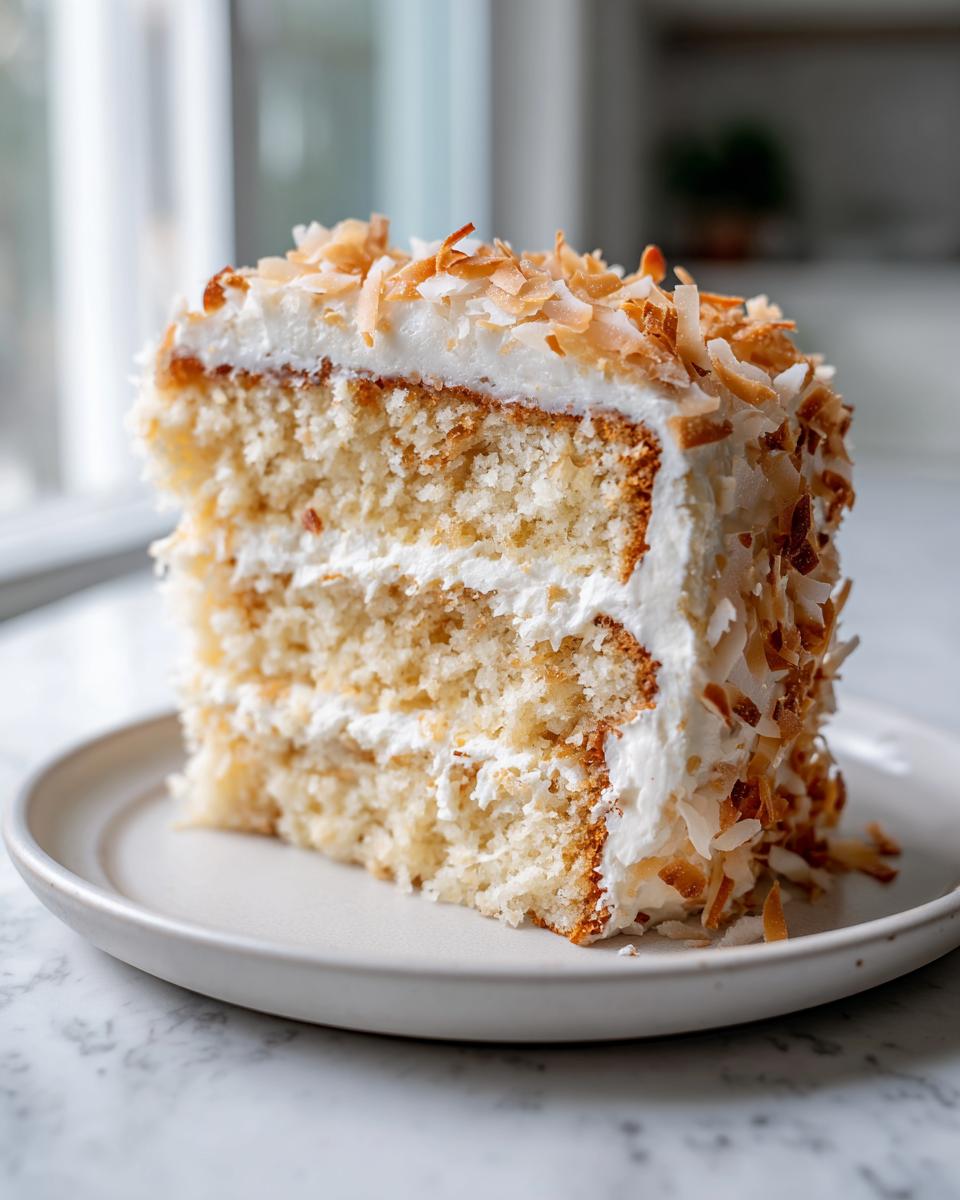
Okay, this decadent coconut cake is practically a showstopper all on its own, but sometimes you want to turn a simple dessert into a full tropical spread! Because this recipe is so rich and flavorful, it pairs beautifully with bright, slightly tart accompaniments. It’s the kind of cake that makes people immediately ask if you have more best dessert recipes up your sleeve.
For birthdays, I love keeping things simple since the cake does all the heavy lifting. A scoop of simple vanilla bean ice cream melts just perfectly next to the frosting. If you’re serving it during the warmer months, try pairing a slice with fresh berries—strawberries and raspberries cut through the richness delightfully. And if you’re looking for other easy but impressive sweets to round out the table, you should absolutely check out my collection of delicious dessert recipes. Honestly, even something simple like a dollop of slightly tart lemon curd on the side makes this tropical cake feel brand new every time!
Another favorite idea for making a full dessert experience? Serve a small slice alongside a warm classic, like my go-to Bananas Foster recipe. The warm, caramelized banana topping just contrasts so nicely with the cool, creamy coconut.
Storage and Reheating for Your Coconut Cake
I know, I know. This cake disappears fast! But just in case you manage to squirrel away a slice or two (which you absolutely should), we need to talk storage. Because we use that gorgeous, tangy cream cheese frosting, you can’t just leave any remaining pieces out on the counter. Nope! Pop any remaining pieces into an airtight container and stick them right into the refrigerator. This keeps the frosting nice and firm, stopping it from getting weird.
The one crucial tip here, and this is something I learned the hard way after eating a chilled slice right out of the fridge one morning, is texture. Even the moist coconut cake layers get a little firm when they are cold. So, before you serve the leftovers, let them sit out on the counter for about 30 to 45 minutes. This brings the butter and cream cheese back up to a temperature where the cake softens beautifully again, and you get that melt-in-your-mouth sensation back. Seriously, don’t skip that little warm-up period; it’s the secret to enjoying day-two slices!
Frequently Asked Questions About This Coconut Cake Recipe
I always get questions when I share this classic coconut flour pancakes recipe, so I know readers will have a few about this decadent baked dessert, too! It’s natural to want to tweak things, but I want to make sure you get that perfect, moist coconut cake result. Here are the most common things I hear when people try to make this coconut cake from scratch.
Can I make this coconut cake recipe ahead of time?
You absolutely can! Baking ahead is a lifesaver, especially if this is for a party. I recommend baking the layers and letting them cool completely—this is really important. Store them wrapped tightly at room temperature for up to two days, or put them in the fridge. I wait to add the coconut cream cheese frosting until the day you plan to serve it, though. If you frost it too early, the coconut absorbs moisture from the fridge and can get a little soggy.
What is the best substitute for whole milk in this recipe?
Since this is a recipe where moisture is king, you want to be careful when swapping. If you are out of whole milk, the absolute best substitute is an equal amount of half-and-half, as it has a similar fat content. If you don’t have that, you can use regular milk mixed with one tablespoon of melted butter per cup. That helps bring back some of the richness that the whole milk provides. If you’re curious about dairy-free options, I have a fun coconut poke cake method on another page that addresses dairy swaps better, since those recipes are built differently!
Nutritional Snapshot of This Homemade Coconut Cake
Now, I’m Ava Sinclair, and while I believe wholeheartedly in feeding your soul with delicious food, I also understand we sometimes need a quick idea of what we are working with! When you make our coconut cake recipe from scratch, remember that nutrition labels are always estimates, and that’s especially true here since we are using real butter and fresh ingredients.
Please know that the final caloric and sugar counts for your beautiful layer cake can swing depending on exactly what brand of cream cheese you use, how thick you spread the frosting, and even the size of your individual slices. Since this is a true old fashioned coconut cake, it’s made to be rich and satisfying!
For the most accurate picture, you’ll need to input your exact products and portion sizes into your preferred tracking app. But honestly? When a cake tastes this good and brings this much joy, I think it deserves a generous serving now and then. Enjoy every bite of this amazing homemade coconut cake!
Share Your Experience Making This Coconut Cake Recipe
I truly hope you’ve rolled up your sleeves and created this beautiful, fluffy delight in your own kitchen! Taking the leap from just looking at a recipe to actually baking it is where the real satisfaction lives. That’s the whole point of Kitchenican—to give you the confidence to get that spatula moving!
Now that you’ve made this moist coconut cake, I would absolutely love to hear how it turned out for you. Did you stick to the classic look, or did you add some fun sprinkles for a birthday celebration? Drop a rating down below—if this was the best coconut cake recipe you’ve ever tried, give it five stars!
And if you took photos—and I really hope you did—please share them! Tag me on social media, or if you have any lingering questions about the frosting or the tricky toasting step, feel free to reach out anytime via my contact page. Hearing how a recipe resonated with you really helps me keep creating simple, accessible, and joyful recipes. Happy baking!
PrintThe Best Moist and Fluffy Old-Fashioned Coconut Cake Recipe
This recipe creates a truly moist coconut cake from scratch with fluffy layers and a creamy coconut cream cheese frosting. It brings Southern charm to your table for any celebration.
- Prep Time: 25 min
- Cook Time: 35 min
- Total Time: 60 min
- Yield: 10 servings 1x
- Category: Dessert
- Method: Baking
- Cuisine: American
- Diet: Vegetarian
Ingredients
- 1 3/4 cups all-purpose flour
- 1 3/4 cups granulated sugar
- 1 tablespoon baking powder
- 1/2 teaspoon salt
- 1 cup unsalted butter, softened
- 4 large eggs, room temperature
- 1 cup whole milk, room temperature
- 1/2 cup coconut milk (full fat)
- 2 teaspoons vanilla extract
- 1 teaspoon coconut extract
- 1 cup sweetened shredded coconut (for batter)
- 1 cup cream cheese, softened
- 1/2 cup unsalted butter, softened (for frosting)
- 4 cups powdered sugar, sifted
- 1 teaspoon coconut extract (for frosting)
- 1/4 cup heavy cream
- 1 1/2 cups sweetened shredded coconut, toasted (for coating)
Instructions
- Preheat your oven to 350°F (175°C). Grease and flour two 9-inch round cake pans. Line the bottoms with parchment paper.
- In a large bowl, whisk together the flour, granulated sugar, baking powder, and salt.
- Add the 1 cup of softened butter to the dry ingredients. Beat with an electric mixer on low speed until the mixture resembles coarse sand.
- In a separate bowl, whisk together the eggs, whole milk, coconut milk, vanilla extract, and coconut extract.
- Gradually add the wet ingredients to the dry ingredients, mixing on medium speed until just combined. Do not overmix.
- Gently fold in the 1 cup of sweetened shredded coconut for the batter.
- Divide the batter evenly between the prepared cake pans. Bake for 30 to 35 minutes, or until a toothpick inserted into the center comes out clean.
- Let the cakes cool in the pans for 10 minutes before inverting them onto a wire rack to cool completely.
- Prepare the coconut cream cheese frosting: Beat the softened cream cheese and 1/2 cup softened butter together until smooth.
- Gradually add the sifted powdered sugar, mixing on low speed until incorporated, then increase speed to medium.
- Add the coconut extract and heavy cream. Beat until the frosting is light and fluffy.
- Once the cakes are completely cool, place one layer on a serving plate. Spread a generous layer of frosting over the top.
- Place the second cake layer on top. Frost the top and sides of the entire cake with the remaining frosting.
- Press the toasted shredded coconut onto the top and sides of the cake.
Notes
- For the best texture, ensure your butter, eggs, and milk are at room temperature before starting the cake batter.
- To toast the coconut for coating, spread it on a baking sheet and bake at 350°F (175°C) for 5-8 minutes, watching closely to prevent burning.
- If you want an extra moist cake, consider poking holes in the cooled layers and drizzling a small amount of coconut milk over them before frosting.
Nutrition
- Serving Size: 1 slice
- Calories: 480
- Sugar: 55g
- Sodium: 250mg
- Fat: 26g
- Saturated Fat: 16g
- Unsaturated Fat: 10g
- Trans Fat: 0.5g
- Carbohydrates: 62g
- Fiber: 1g
- Protein: 5g
- Cholesterol: 110mg