

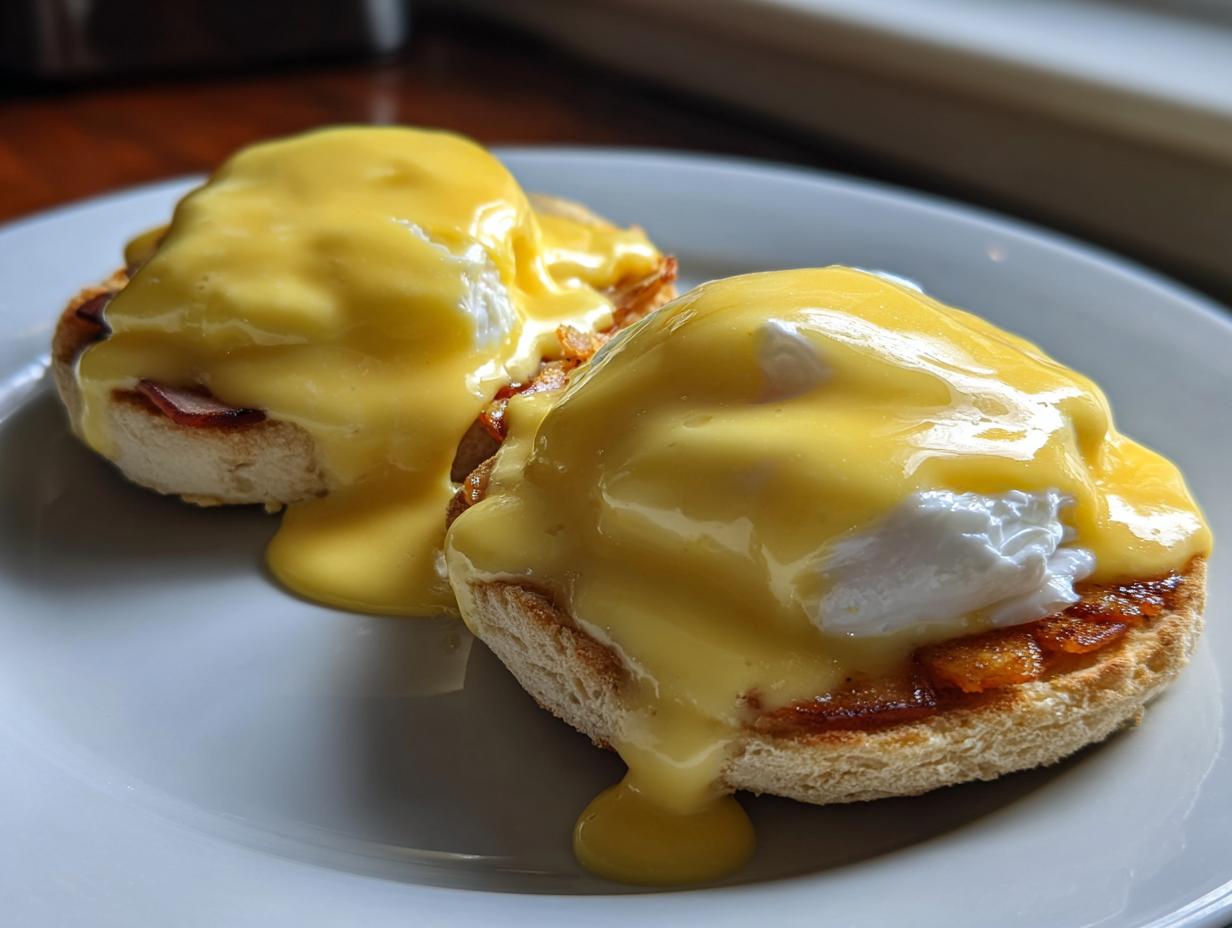
Listen, I know getting that perfect weekend brunch on the table can feel like walking a tightrope. You want that gorgeous, restaurant-style breakfast that just screams ‘relax, you deserve this,’ but then you remember the two villains of the morning: the fragile poached egg and that notoriously finicky Hollandaise sauce. Stop right there! That stops today. We are going to conquer the classic eggs benedict using methods so reliable, they practically build confidence right into the plating. Forget second-guessing; this guide is about empowerment and stacking buttery perfection high.
- Why This Classic Eggs Benedict Recipe Builds Home Cook Confidence
- Gathering Ingredients for Your Eggs Benedict
- How to Prepare the Homemade Hollandaise Sauce Tutorial
- Mastering How to Poach Eggs Perfectly for Eggs Benedict
- Assembling Your Perfect Eggs Benedict
- Make Ahead Brunch and Storage Tips for Eggs Benedict
- Variations on the Classic Eggs Benedict Recipe
- Frequently Asked Questions About Making Eggs Benedict
- Nutritional Estimates for Your Decadent Breakfast
Why This Classic Eggs Benedict Recipe Builds Home Cook Confidence
I’m not kidding when I say that mastering eggs benedict used to fill me with dread. But that was before I realized the “old way” of doing things was designed to make you fail! This recipe flips the script. We aren’t using double boilers or praying over the stovetop. We are using reliable, modern kitchen tools to guarantee success, which is how we build real, lasting confidence in the kitchen.
- The Blender Hollandaise: Seriously, this is the game changer. It’s fast, it’s incredibly stable, and it keeps the heat away from your delicate egg yolks. No more broken sauce!
- Controlled Poaching: We manage the water temperature—that’s our secret—meaning your eggs look right, hold their shape, and deliver that perfect molten center every single time.
- Smart Assembly: I lay out the steps so you aren’t frantically doing three things at once when guests arrive!
Achieving Restaurant Style Breakfast Results
You absolutely deserve that gourmet breakfast experience on a lazy Sunday. By simplifying the two hardest parts—the sauce and the egg—we strip away the complexity that usually keeps this dish in the restaurant. You just follow the procedure, and bam, you’ve got that creamy, citrusy topping draped over perfectly cooked protein and muffin. It’s seriously impressive, yet totally achievable.
Perfect Timing for Your Weekends Brunch Dishes
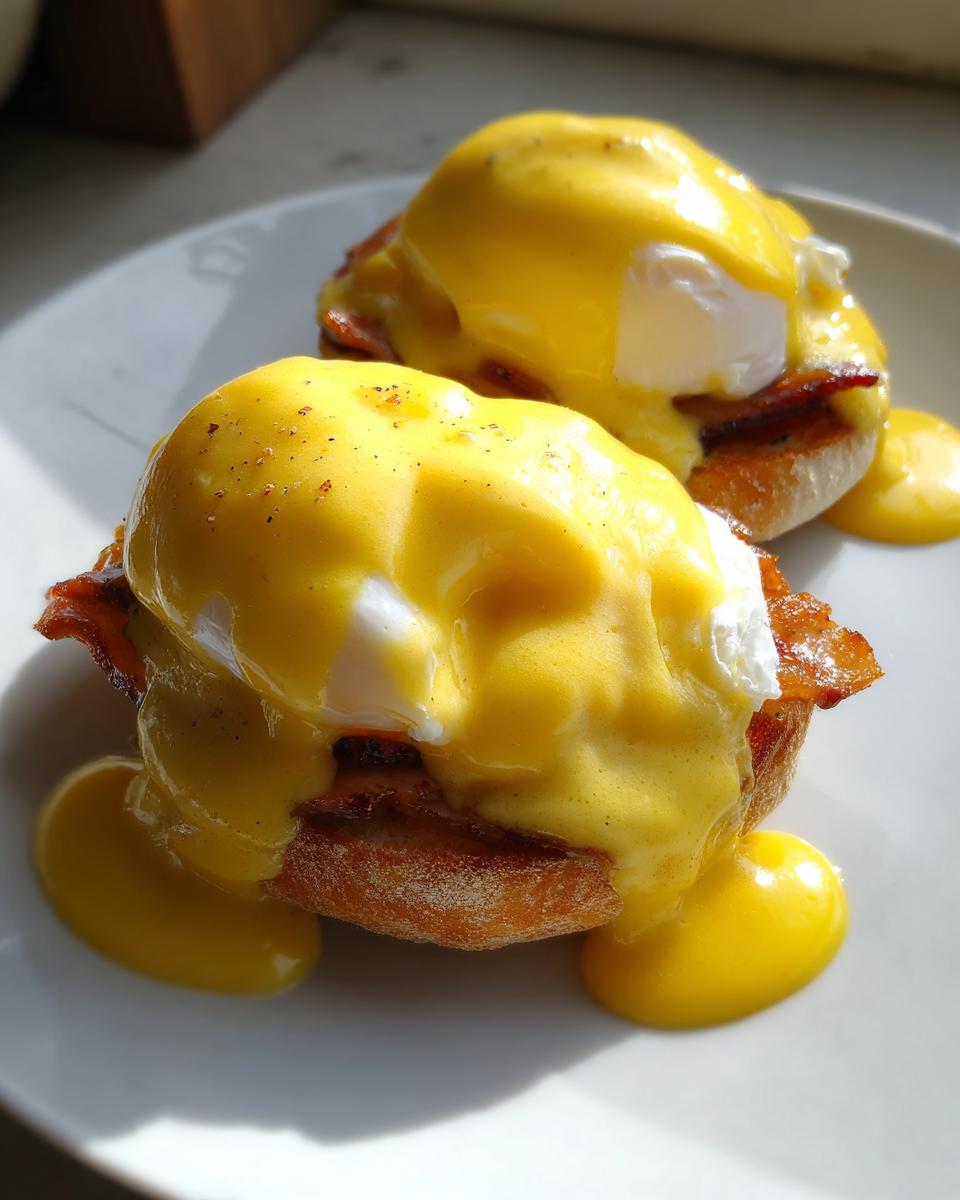
The secret to stress-free weekend brunch dishes is sequencing. We get the sauce done first, keep it warm, and then move onto the eggs, which cook in literally three minutes flat. By the time you’ve toasted your English muffin halves and warmed the Canadian bacon, the whole dish comes together in a beautiful, stacked symphony. No more stale muffins or cold sauce!
Gathering Ingredients for Your Eggs Benedict
Before we jump into the magic, we need our players assembled! Remember, we’re aiming for that gourmet breakfast feel, so quality matters a tiny bit here. Don’t buy cheap yogurt substitutes for that sauce; splurge a little on real butter! Everything needs to be ready to go before we start cooking because timing is everything once we get moving. Trust me on preparing your mise en place.
For the Foolproof Blender Hollandaise Sauce
This sauce is where the richness comes from, so we need the stars of the show here. Remember that butter needs to be fully melted, but not brown—just nice and hot when you start blending. That heat is what cooks the yolks perfectly!
- 3 large egg yolks
- 1 cup unsalted butter, melted and hot (seriously, make sure it’s hot!)
- 1 tablespoon fresh lemon juice
- 1/2 teaspoon salt
- A tiny pinch of cayenne pepper (don’t skip this, it wakes everything up!)
Components for Building the Eggs Benedict
Now for the structure of our tower! We need good, thick English muffins—maybe even make them yourself if you’re feeling ambitious—and we definitely want to use Canadian bacon here for that classic savory note.
- 4 large eggs (we need that perfect runny yolk!)
- 4 English muffin halves
- 4 slices Canadian bacon or ham
- 1 tablespoon white vinegar (our secret weapon for tight egg whites)
- Butter or oil for toasting
How to Prepare the Homemade Hollandaise Sauce Tutorial
Okay, let’s tackle the Hollandaise sauce. I’m using the blender method because it’s fast, it’s foolproof, and honestly, it just works every single time for my eggs benedict. Put your room-temperature egg yolks, lemon juice, salt, and cayenne right into the blender jar. Pulse it a few times until it’s just combined. Don’t blend it too much yet!
Now for the crucial part: the butter. You need that whole cup of butter fully melted and hot. With the blender running on low—and I mean *low*—slowly drizzle that hot butter in through the lid opening. It needs to be a super thin, steady stream, like a tiny golden thread falling in. Watch it thicken up; it’s magic! In under a minute, you’ll have the creamiest, silkiest sauce you’ve ever made using this easy technique.
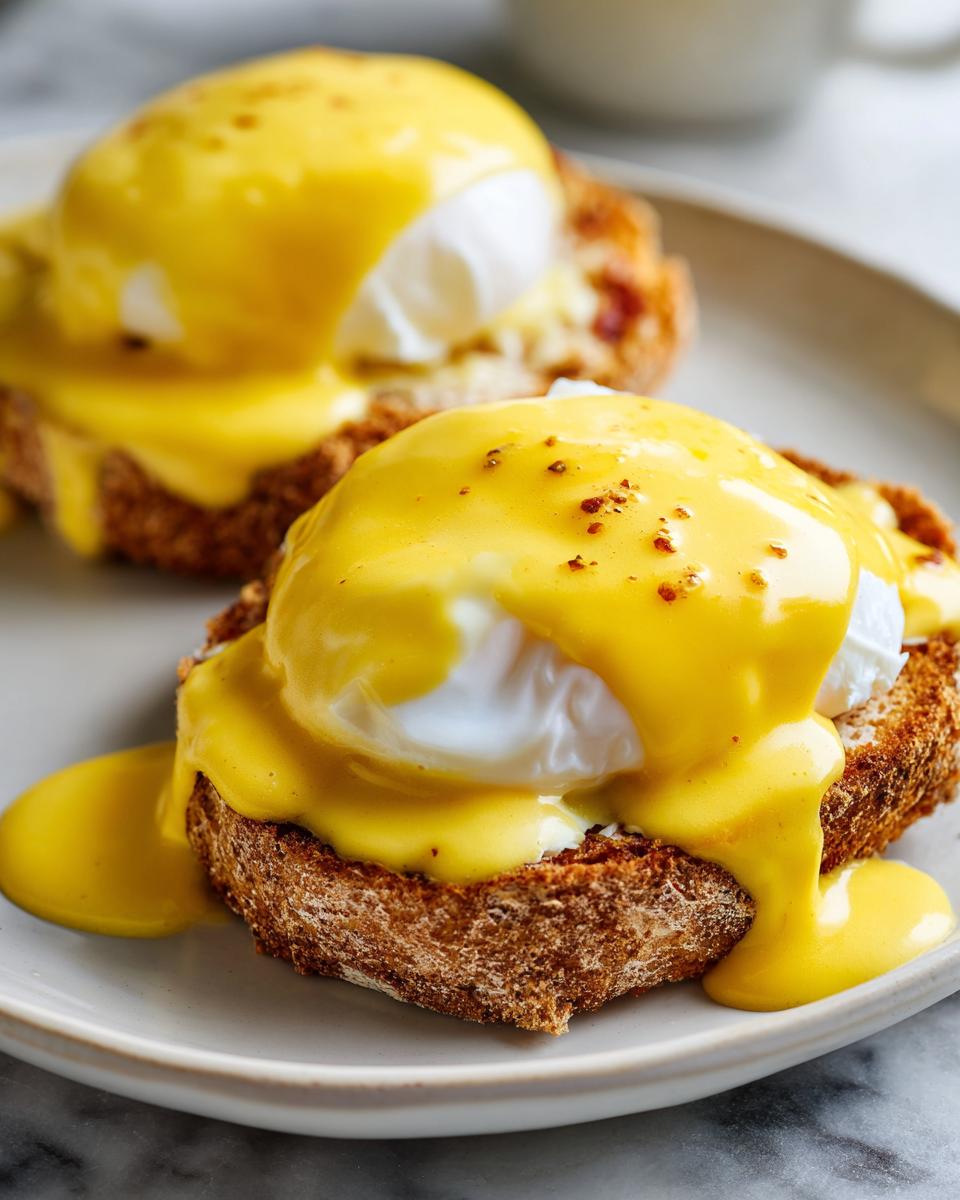
My top tip to keep this perfect sauce warm while you poach eggs? Don’t put it back on the heat! That’s asking for trouble. Transfer the finished sauce to a thermos or a bowl nestled in a pan of warm (not hot!) water. This gentle heat keeps it luscious and spreadable until it’s time to grace your masterpiece.
Mastering How to Poach Eggs Perfectly for Eggs Benedict
Alright, deep breath! This is usually the part where everyone—myself included, years ago—gets nervous. But that’s where we apply our new confidence. We aren’t looking for a raging boil when we poach eggs; that just tears them apart. We want a gentle simmer—think tiny, lazy bubbles rising from the bottom of the pan. Bringing water almost to a boil and then immediately turning the heat down is key. Adding a tablespoon of white vinegar is non-negotiable for me; it helps those whites set up tight around the yolk, which is the holy grail of the foolproof poaching method.
Before they hit the water, always crack your egg into a tiny little bowl or ramekin first. Never drop an egg straight from the shell into the water! This lets you gently check the state of the white and allows you a controlled slide into the pan. For that beautiful tear-drop shape that looks so elegant in your final eggs benedict, create a very gentle swirl in the water with a spoon right before you slide the egg in. Cook these beauties for about 3 to 4 minutes—that gives you that divine, runny yolk centerpiece we are aiming for.
Tips for Foolproof Poaching Method
You need space for your eggs to swim comfortably! Use the widest, shallowest pan you own—it keeps the water depth consistent. Another major tip? Don’t try to cram all four eggs in at once. Do them in pairs, or even one at a time if you’re nervous. Once they are done, lift them out gently with a slotted spoon and let them rest on a paper towel for just a second to drain. We are building layers of perfection here, so don’t rush this step!
Assembling Your Perfect Eggs Benedict
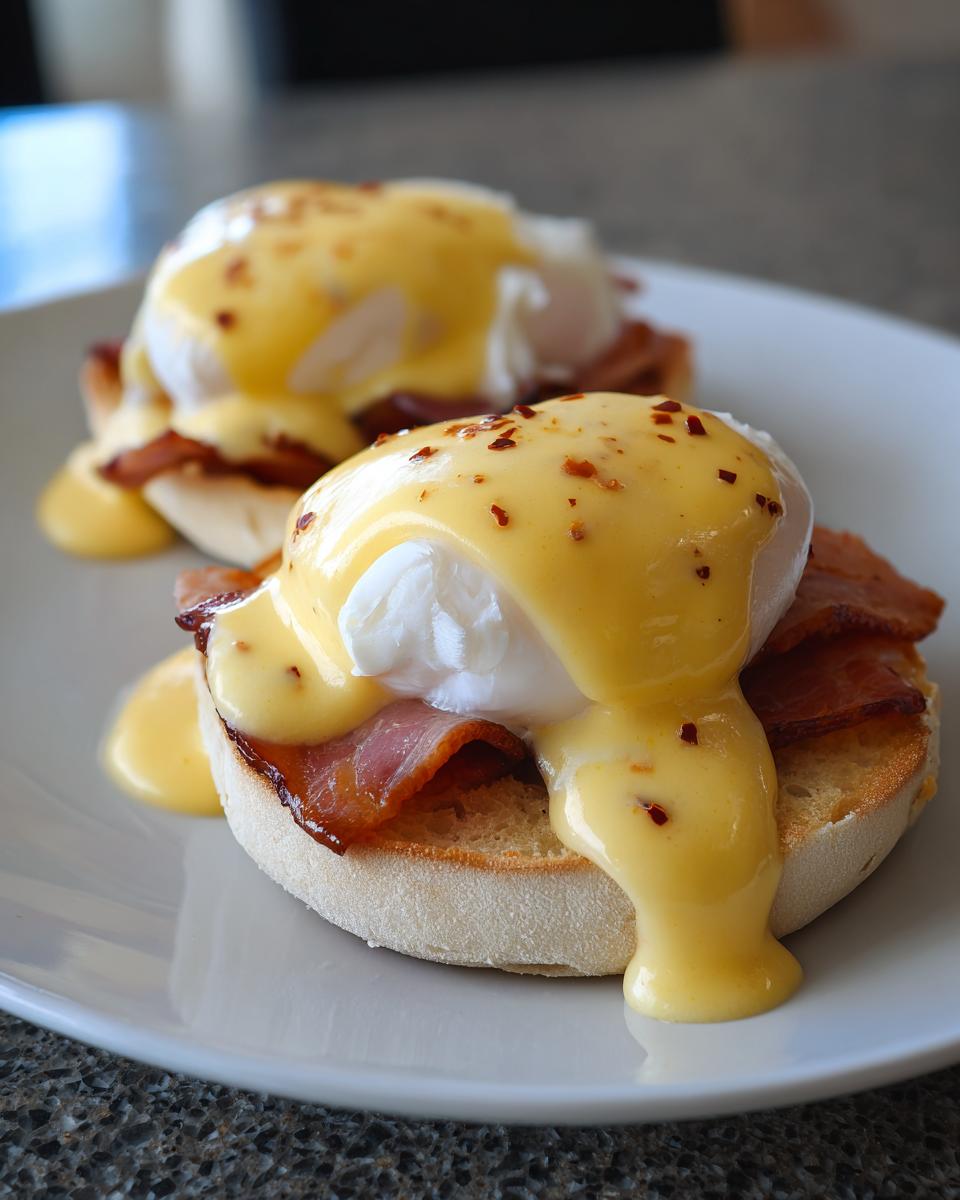
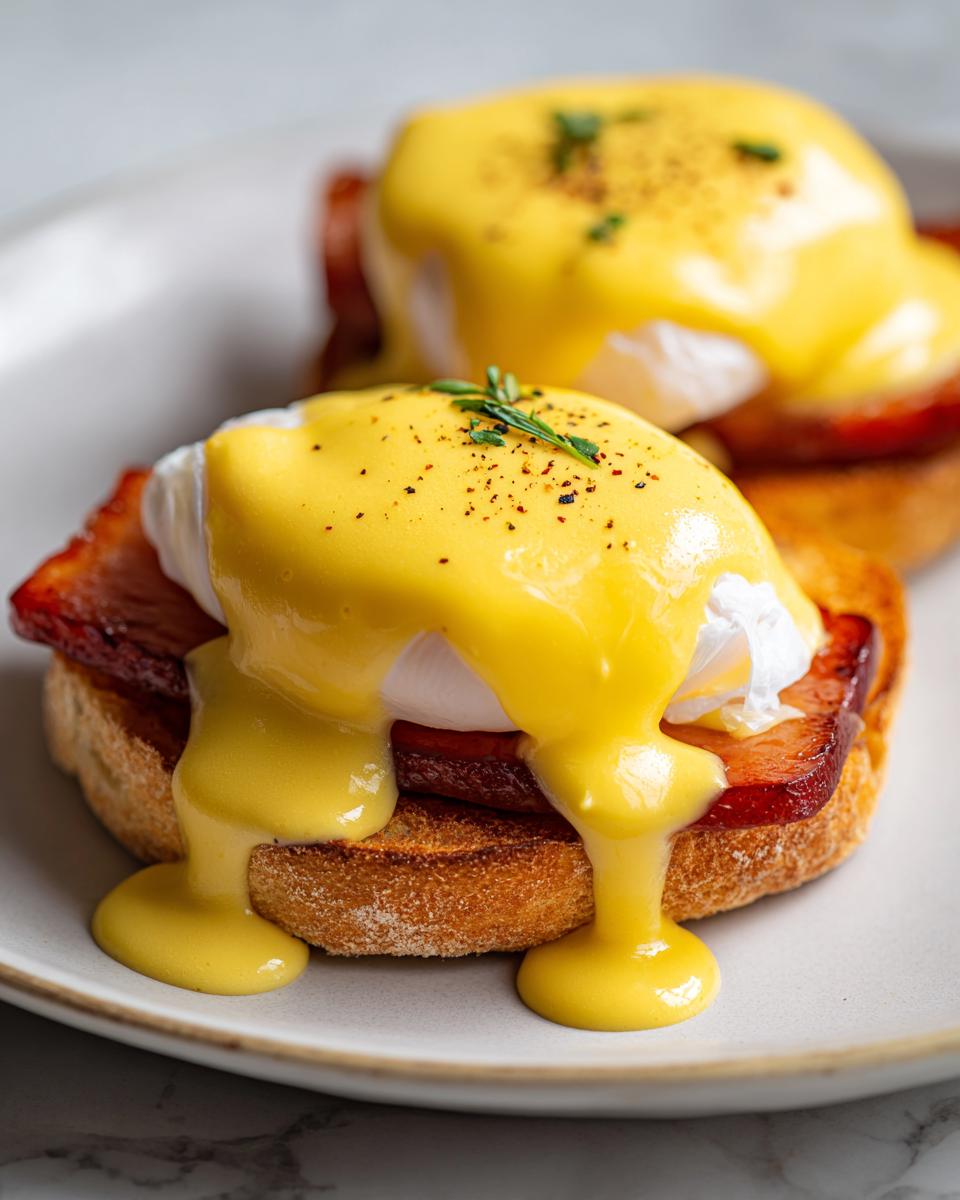
This is the grand finale! You’ve nailed the sauce, you’ve poached those lovely eggs—now we build the tower. The key to achieving that true restaurant style breakfast is ensuring every component is warm right up until the moment you eat it. Start by laying out your lightly toasted and perhaps buttered English muffin halves. Next, place a warm slice of Canadian bacon right on top of that base.
Now, delicately lift that perfectly cooked egg from your warm water bath and set it right on the bacon. Don’t worry about drips; that just means it’s good! Finally, the moment we’ve waited for: generously spoon that luscious, homemade Hollandaise all over the top of the egg. That rich, buttery coating dripping down the sides is the signature of a perfect eggs benedict. Serve immediately and watch everyone ooh and aah!
Make Ahead Brunch and Storage Tips for Eggs Benedict
One of the biggest myths about serving eggs benedict is that you have to do absolutely everything at the last minute. Nonsense! If you’re planning a big weekend gathering or just want a decadent breakfast waiting for you when you wake up, we can absolutely do some prep work. Listen, the English muffins should always be toasted right before serving because they get hard fast, but the sauce and the eggs? They are totally fine to prep ahead!
You can whip up that glorious Hollandaise sauce up to two days ahead of time. Keep it in an airtight container in the fridge, and then gently reheat it. I mean *gently*—low heat on the stove while stirring constantly, or tuck it into a little thermos like I mentioned before. The poached eggs can also be made ahead! Just cool them slightly, store them in cold water in the fridge, and then just before assembling, drop them into warm (not hot!) water for about 60 seconds to bring them back up to temperature. It keeps them safe and they still burst perfectly when cut!
Variations on the Classic Eggs Benedict Recipe
While the classic version with Canadian bacon is unbeatable for that special occasion breakfast, sometimes you need to pivot! Once you’ve mastered the core recipe, you’ll feel confident enough to experiment with all sorts of fun alternatives. Serving brunch to a big crowd? Don’t want to stand there poaching eggs for an hour? We have solutions for that, too. Think of these as extensions of your new culinary superpowers.
Trying an Eggs Benedict Casserole
If you need an amazing easy brunch idea for feeding ten people without the fuss, you absolutely have to try an eggs benedict casserole. Essentially, you layer the bread, bacon, and eggs in a big dish and bake it. It uses the same flavor profile but turns it into one of those wonderful savory brunch bakes. It’s perfect for when you want that decadent breakfast flavor without the individual assembly line.
Swapping Proteins for a Different Flavor Profile
Canadian bacon is classic, but what if you want something lighter or maybe something totally different for your gourmet breakfast? Smoked salmon is divine—that salty, velvety texture against the rich Hollandaise just sings! If you’re serving vegetarians, skip the meat entirely and layer wilted, garlicky spinach or sautéed mushrooms instead. It makes for a beautiful vegetarian brunch option that still feels incredibly fancy.
Frequently Asked Questions About Making Eggs Benedict
I know you might still have little uncertainties floating around, especially if this is your first time trying to build the ultimate brunch recipes masterpiece. That’s totally normal! The two trickiest parts can cause hiccups, but I’ve gathered the answers for you right here to boost your confidence for next weekend.
Why does my Hollandaise sauce keep breaking or separating?
This almost always comes down to temperature or speed. If you add the hot melted butter too fast, the yolks can’t handle the sudden rush of heat and fat—they separate! Or, if your butter cools down slightly before you finish drizzling, it solidifies and won’t blend. Remember, if it breaks, don’t panic! Just pop the mixture back into the blender and drizzle in one tiny teaspoon of warm water while blending low. It usually comes right back together magically.
Can I use regular strip bacon instead of Canadian bacon?
You certainly *can*, but it changes the whole vibe of the classic eggs benedict recipe! Canadian bacon is leaner and thicker, holding its shape well under the egg and sauce. Regular strip bacon is crispy and greasy, and while delicious, it tends to wilt and get soggy fast when layered with the poached egg. Stick to Canadian bacon or ham for that perfect foundational slice!
What is the absolute best way to keep the poached eggs warm?
I mentioned this briefly, but it’s worth repeating because this trick saves Sunday mornings! Once the eggs are cooked perfectly, lift them out of the water with a slotted spoon and place them gently into a bowl filled with warm, but definitely not hot, water. The water should be warm enough to keep them cozy but cool enough not to cook them further. They can happily wait there for ten minutes while you plate everything else.
Nutritional Estimates for Your Decadent Breakfast
Alright, let’s talk fuel! Making Eggs Benedict is certainly treating yourself to a truly decadent breakfast—it is rich, it’s buttery, and it’s fantastic for a special occasion breakfast. Because we are using rich butter in our Hollandaise and have those beautiful yolks in the eggs, the numbers are what you’d expect for this kind of luxurious meal. But hey, that’s why we save it for brunch, right?
I always want to be super transparent about what we’re eating here at Kitchenican, so these estimates are based on the recipe servings above, using Canadian bacon. Remember, these are just guides; if you sneak an extra drizzle of that homemade Hollandaise sauce on there—and who could blame you?—the numbers will shift a bit!
- Serving Size: 1 serving (2 muffin halves)
- Calories: 650
- Fat: 50g (with about 25g of that being that rich, saturated fat we love from the butter!)
- Carbohydrates: 25g
- Protein: 28g
- Cholesterol: 450mg (Yep, egg yolks are high in cholesterol, but they bring amazing nutrition to our brunch recipes!)
Enjoy every savory bite of this incredible classic—you absolutely earned it this weekend!
PrintClassic Eggs Benedict: Foolproof Hollandaise and Perfect Poached Eggs

Create restaurant-style Eggs Benedict at home. This guide provides clear steps for mastering the creamy homemade Hollandaise sauce and achieving consistently perfect poached eggs for your next special occasion brunch.
- Prep Time: 15 min
- Cook Time: 15 min
- Total Time: 30 min
- Yield: 2 servings 1x
- Category: Brunch
- Method: Stovetop
- Cuisine: American
- Diet: Vegetarian
Ingredients
- 4 large eggs (for poaching)
- 4 English muffin halves
- 4 slices Canadian bacon or ham
- 1 tablespoon white vinegar (for poaching water)
- Butter or oil for toasting
- For the Foolproof Blender Hollandaise Sauce:
- 3 large egg yolks
- 1 cup unsalted butter, melted and hot
- 1 tablespoon fresh lemon juice
- 1/2 teaspoon salt
- Pinch of cayenne pepper
Instructions
- Prepare the English Muffins: Lightly toast the English muffin halves. Lightly spread with butter if desired. Set aside and keep warm.
- Cook the Bacon: Lightly pan-fry the Canadian bacon slices until heated through and edges are slightly browned. Keep warm.
- Make the Hollandaise Sauce (Blender Method): Place the egg yolks, lemon juice, salt, and cayenne pepper into a blender jar. Blend on low speed for about 15 seconds until combined. With the blender running on low speed, slowly drizzle the hot, melted butter in a thin, steady stream through the opening in the lid. Continue blending until the sauce is thick and emulsified. Do not over-blend. Keep the sauce warm in a thermos or a bowl set over warm (not simmering) water.
- Poach the Eggs: Bring a wide, shallow pan of water to a gentle simmer (small bubbles rising, not a rolling boil). Add the white vinegar to the water. Crack one egg into a small bowl or ramekin. Create a gentle whirlpool in the simmering water with a spoon. Carefully slide the egg into the center of the whirlpool. Cook for 3 to 4 minutes for a runny yolk. Remove the egg with a slotted spoon, draining excess water. Repeat with the remaining eggs.
- Assemble the Eggs Benedict: Place two toasted English muffin halves on each plate. Top each half with a slice of warm Canadian bacon. Place one perfectly poached egg on top of the bacon. Spoon a generous amount of the warm Hollandaise sauce over the egg. Serve immediately for a gourmet breakfast experience.
Notes
- To keep poached eggs warm while you finish the batch, place them briefly in a bowl of warm (not hot) water.
- If your Hollandaise sauce separates, place the mixture back into the blender and slowly blend in one teaspoon of warm water until it comes back together.
- For make-ahead brunch, you can prepare the poached eggs and Hollandaise sauce up to two days ahead. Reheat the sauce gently over low heat or in a thermos. Gently reheat the poached eggs in warm water just before serving.
Nutrition
- Serving Size: 1 serving (2 halves)
- Calories: 650
- Sugar: 3
- Sodium: 850
- Fat: 50
- Saturated Fat: 25
- Unsaturated Fat: 25
- Trans Fat: 1
- Carbohydrates: 25
- Fiber: 2
- Protein: 28
- Cholesterol: 450