

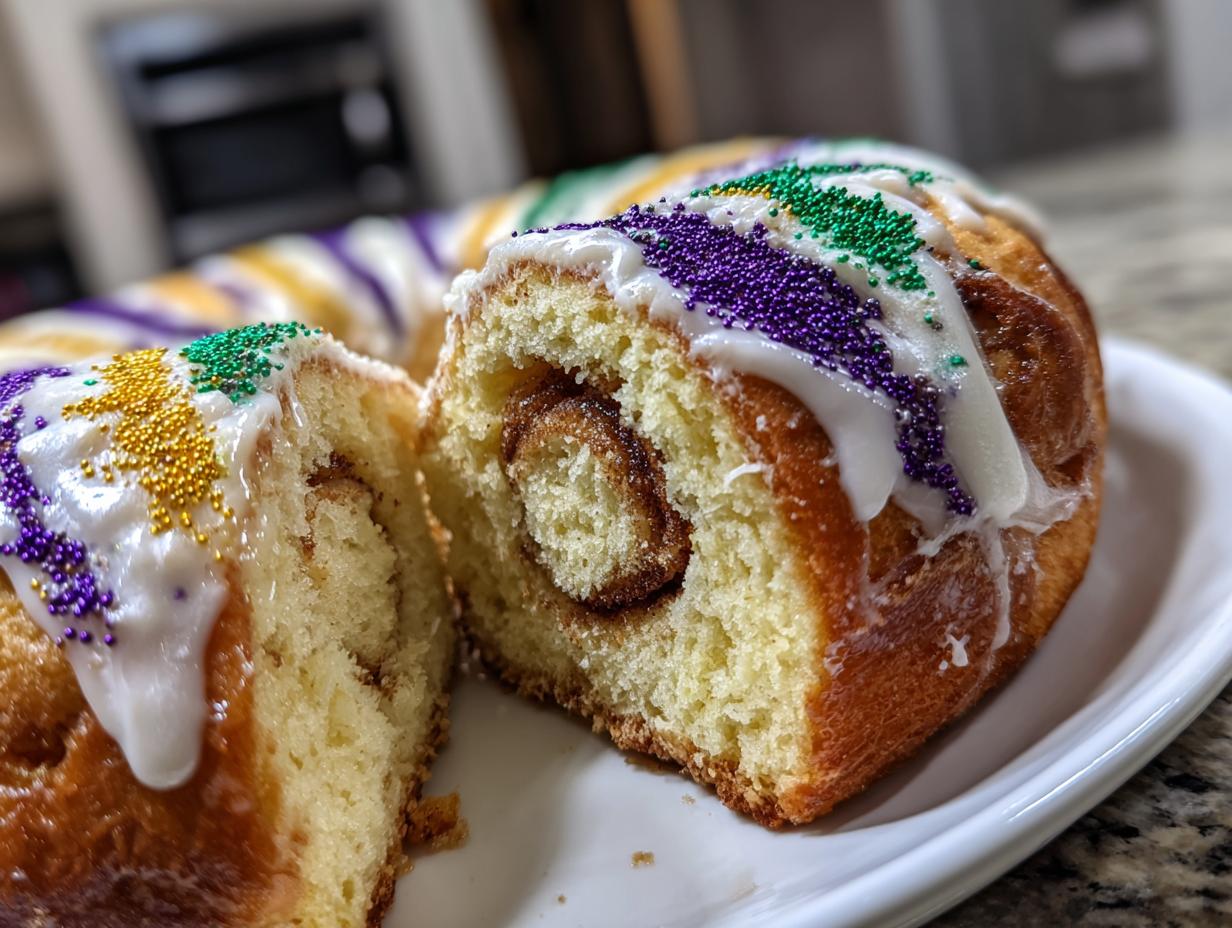
When that first crisp January air hits, my mind immediately jumps to parades and parties! Forget feeling like you can’t handle yeasted dough; making an amazing King Cake is totally within reach. I remember staring at recipes years ago, thinking, “No way I can make something that looks that incredible.” But trust me, this New Orleans Style King Cake recipe is my secret weapon for delivering that soft, moist texture, a rich cinnamon swirl, and, the best part, an icing that actually stays put! It’s all about bringing that celebratory joy of Carnival right into your own kitchen, no doubts allowed.
- Why You Will Bake This King Cake (Experience and Trust)
- Ingredients for Your Soft and Moist King Cake
- Step-by-Step Instructions for the New Orleans King Cake
- Tips for the Perfect Cinnamon Swirl King Cake
- Ingredient Notes and Substitutions for Your King Cake
- Storing and Reheating Your Homemade King Cake
- Frequently Asked Questions About the Mardi Gras King Cake
- Estimated Nutritional Data for This King Cake Recipe
- Share Your Festive King Cake Creations
Why You Will Bake This King Cake (Experience and Trust)
I get it—yeast dough can feel intimidating when you’re striving for that perfect Carnival bake. But this recipe is designed to eliminate the guesswork. You aren’t just making a cake; you’re bringing tradition home, and it needs to be perfectly soft!
- You get that signature moist interior that stays tender all Carnival season long.
- The cinnamon swirl isn’t just visible; it’s rich and fragrant in every bite.
- We designed the glaze to set nicely, meaning less mess and more vibrant purple green gold cake colors.
- Most importantly, this is a foolproof winner you can confidently share with friends. If you want to know more about how we approach baking with confidence, check out our philosophy here.
Ingredients for Your Soft and Moist King Cake
Okay, gather everything up before you even think about turning on the mixer! For a truly authentic King Cake, paying attention to the state of your ingredients makes all the difference, especially with yeast doughs. We need those eggs happy and warmed up, and the butter for the filling must be perfectly spreadable—not melted, just soft! Don’t skimp on the vanilla here; it really pops in the glaze.
For the Cinnamon Swirl Filling
This filling is what gives us that gorgeous, bakery-style swirl we’re aiming for. Make sure that butter is truly softened, like cool room temperature butter, so it mixes into a beautiful paste.
- 1/2 cup unsalted butter, softened (this is key—soft, not melty!)
- 1/2 cup packed light brown sugar
- 2 tablespoons ground cinnamon
For the Purple, Green, and Gold Cake Glaze
This is where the fun starts! These colors aren’t random, remember—purple means justice, green is for faith, and gold is power. Using good sanding sugar gives you that beautiful, sparkly crust on top of the glaze.
- 3 cups powdered sugar
- 1/4 cup heavy cream
- 1 teaspoon vanilla extract (make it good!)
- Purple, green, and gold sanding sugars (you’ll need a generous amount!)
Step-by-Step Instructions for the New Orleans King Cake
Now we get down to the fun part! Making a beautiful brioche-style dough takes a little patience, but I promise, watching it rise is half the reward. Remember, the key to this soft bread ring really is that yeast—it needs warmth and gentle handling to wake up properly. We’re going to take this slowly together so you nail that characteristic soft texture every single time.
Activating Yeast and Mixing the King Cake Dough
First things first: wake up that yeast! In your big bowl, mix the warm milk (it should feel like a nice warm bath, not hot!) with the yeast and just a tiny bit of the sugar. Set that aside for about 5 to 10 minutes. You have to see some froth or foam on top—that’s how you know they’re hungry and ready to work their magic. If it doesn’t foam, toss it and start this step over; we need active yeast!
Once foamy, toss in the rest of your sugar, those room-temperature eggs, melted butter, salt, and half of your flour. Mix until combined, then slowly add the remaining flour until you have a shaggy, soft dough. Don’t worry if it looks sticky right now—that’s exactly what we want for a moist rise.
Kneading, First Rise, and Preparing the Cinnamon Swirl Bread Ring Filling
Turn that dough out onto a lightly floured surface. You need to knead this for a good 8 to 10 minutes. You are developing structure here! You’ll know it’s ready when it’s smooth and feels elastic. I like doing the classic push-fold-turn method until my knuckles feel worked out. This is where you can test it—if you gently poke it, the dough should slowly spring back. That’s the sign of a great dough ready for its nap!
Put it in a lightly oiled bowl, cover it up, and let it hang out in a warm spot for about an hour to an hour-and-a-half until it’s doubled in size. While you wait, mix up your filling ingredients (softened butter, brown sugar, and cinnamon) until they form a soft, spreadable paste. So easy!
Shaping and Forming Your Festive King Cake
Gently deflate (punched down!) your beautiful dough. On your floured surface, roll it out into a large rectangle—aim for about 12 by 18 inches. Spread that glorious cinnamon filling all over that surface, but stop short of one of the long edges by about an inch—that’s your seal border.
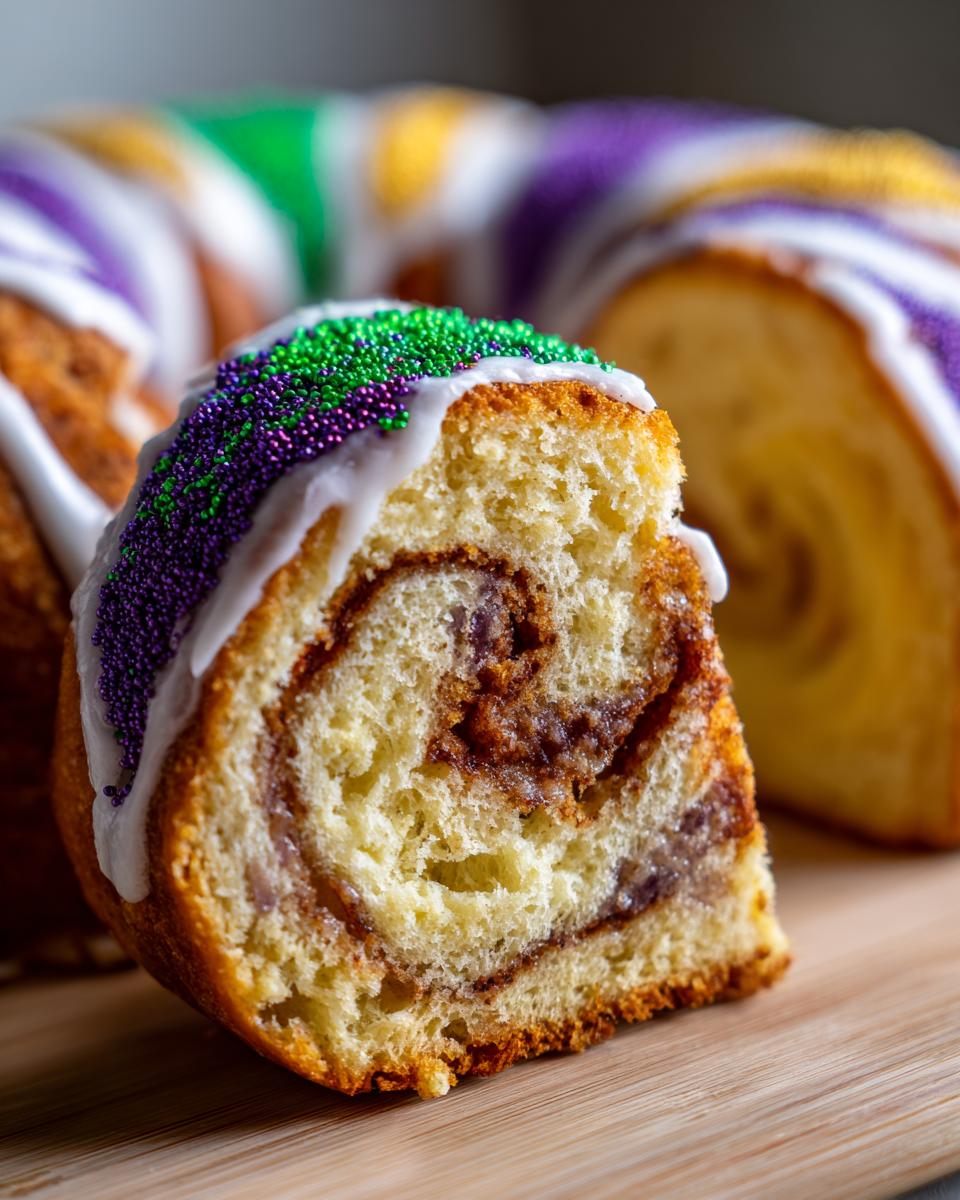
Now, roll it up super tightly, starting from the long edge *without* the border, like you’re rolling a sleeping bag. Pinch that long seam closed really well. Here’s a fun trick: gently stretch the whole log until it’s about 24 inches long. Then, bring the ends together to form that classic oval or ring, pinching the ends together super securely so it doesn’t break in the oven!
If you’re hiding your lucky plastic baby, this is the time to pop it deep into the dough now before the final rise. Place the ring on parchment paper on your baking sheet.
Second Rise, Baking, and Cooling the King Cake
Cover it loosely again and let it get puffy one last time for 30 to 45 minutes. While it’s puffing, preheat your oven to 375°F (190°C). Trust me on this temperature; it cooks the inside nicely without drying out the outside too fast.
Bake for 25 to 30 minutes. If you see the top getting a little too dark for your liking before the time is up, just gently tent it with a piece of foil. Once baked, you must—and I mean *must*—let your King Cake cool completely on a wire rack. If you glaze it while it’s warm, you’ll have a sticky, runny puddle instead of a beautiful glaze crust!
Glazing and Decorating Your Mardi Gras King Cake
Once totally cool, whisk your glaze ingredients: powdered sugar, cream, and vanilla. You want it thick enough to sit on top but thin enough to drizzle nicely—add cream by the teaspoon to get that perfect consistency. Pour that glaze right over the top, letting it drip down the sides naturally.
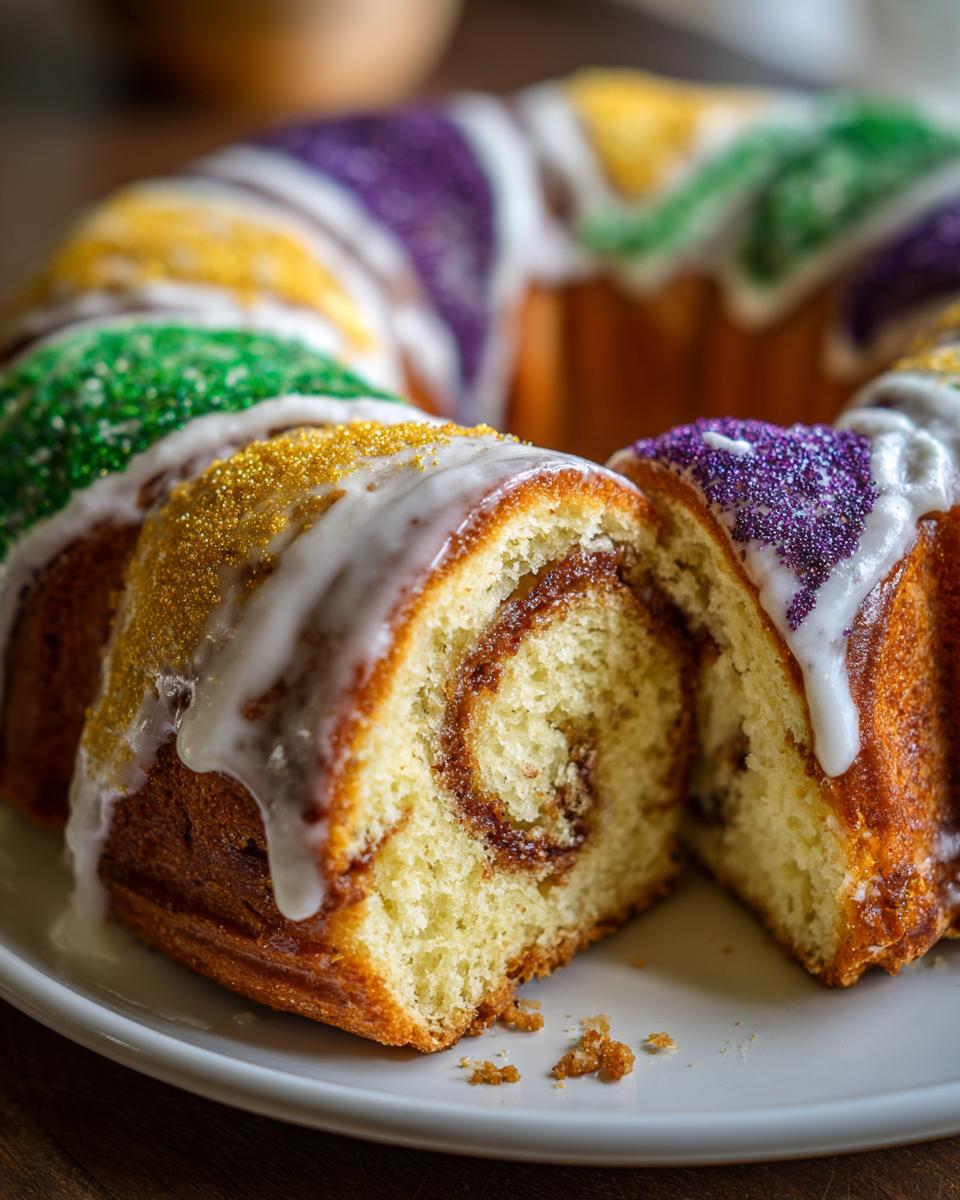
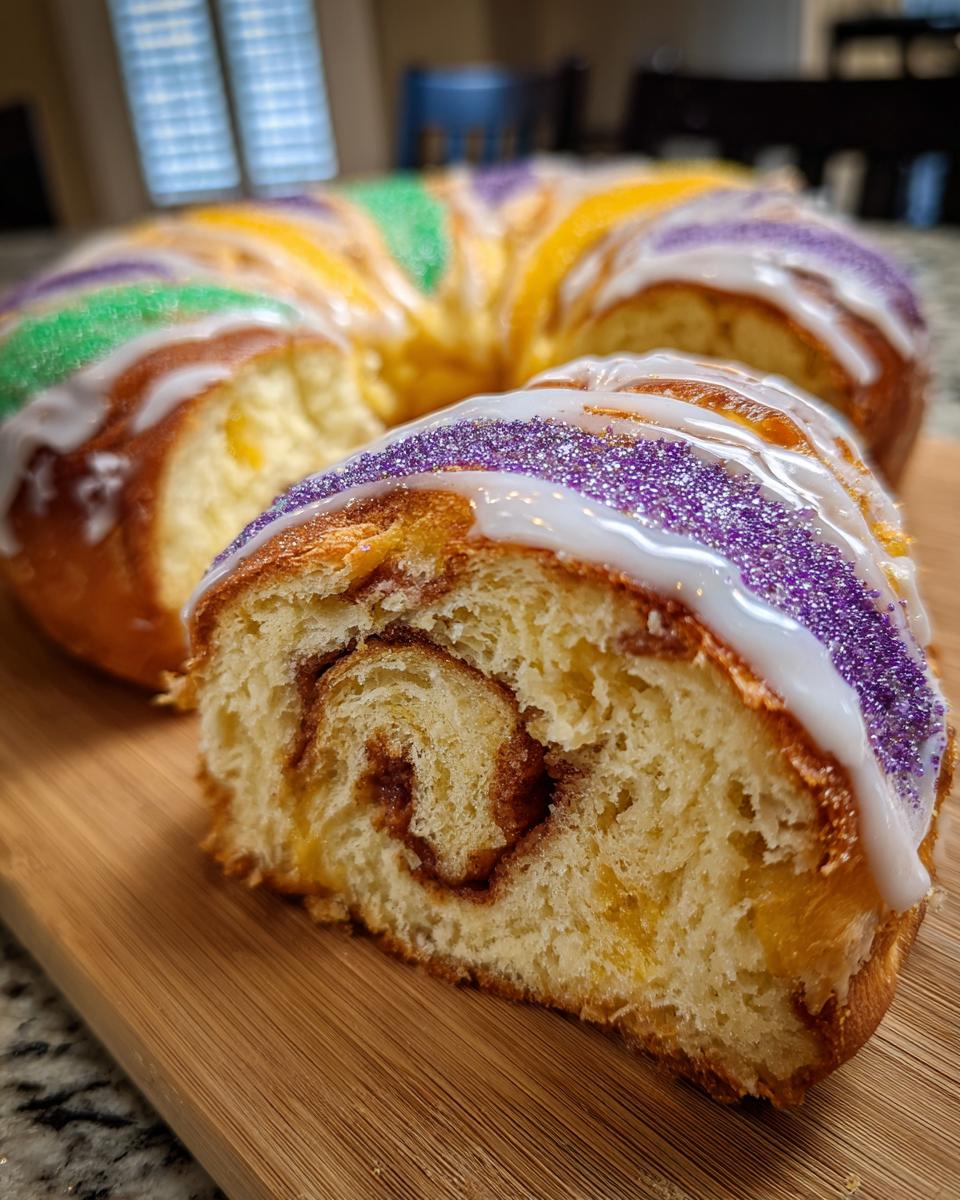
Work fast! Right after the glaze hits, start sprinkling generously with your purple, green, and gold sanding sugars. This is how you get that wonderful, classic purple green gold cake finish that sticks perfectly. Let that glaze set up for about 30 minutes before you slice into the soft, amazing swirl inside!
Tips for the Perfect Cinnamon Swirl King Cake
Baking something this rich in tradition, like a proper King Cake, often comes down to a few little tweaks that separate a good cake from a fantastic one. Since we are working with yeast and a lot of sugar, a few preemptive moves can save you a lot of heartache later on!
First, let’s talk texture. If your cake ends up dry, it usually means one of two things happened: either you overworked the gluten during kneading, or you didn’t let it rise long enough the second time around. That second rise is crucial; the dough needs to be visibly puffy before it hits that 375°F heat. Don’t rush it!
For the icing disaster—a glaze that runs right off the sides—the culprit is almost always warmth. Seriously, if that cake is even slightly warm to the touch, the sugar melts instantly into a thin puddle. I check mine by touching the bottom center of the cooling rack—if I feel any residual warmth creeping up, I let it go another 30 minutes before even thinking about the glaze.
Here’s a little secret I learned the hard way: Every oven is a little quirky! I always keep a separate oven thermometer hanging inside, especially when trying a new recipe. I found out my oven runs 15 degrees hotter on the convection setting, which would have totally dried out this delicate brioche dough. Knowing your actual temperature is the best confidence builder in baking!
Finally, make sure that cinnamon filling mixture is spread edge-to-edge (leaving that one inch border for sealing, of course!). That way, when you slice into it later, you get that stunning, moist cinnamon swirl throughout the entire bread ring, not just one thick patch in the middle!
Ingredient Notes and Substitutions for Your King Cake
Choosing the right building blocks is super important, especially for a yeast cake like this. You might look at the list and think, “Can I just swap this for that?” Well, for texture this soft, some things really matter, and others give you great flexibility. Don’t stress too much, but pay attention to the temperature!
For instance, using room temperature eggs and milk for proofing the yeast isn’t just some fussy rule I made up. Yeast cells need warmth to wake up and thrive, but cold dairy will slow them down or even stop them completely. If your dough doesn’t double during the first rise, it’s usually because the liquids were too cold! Just remember to pull your eggs and milk out about an hour before you start mixing for the best results.
Also, while the cinnamon swirl is my go-to—it gives you that rich, slightly fudgy center that makes a King Cake legendary—you definitely have options if you’re feeling creative or if one ingredient is missing. We need richness in that dough, so stick to the butter, but feel free to mix up the center.
If cinnamon isn’t your absolute favorite, or if you just want to try something different for your next Mardi Gras party, we have a super simple alternative outlined in the recipe notes that works just as beautifully with the brioche dough.
Cream Cheese Filling Swap in Your Soft King Cake
Switching from cinnamon sugar to a cream cheese filling is an easy way to change things up on your friends who think they know your recipe! You’ll still roll the dough out exactly the same way, spread the filling across the rectangle, and roll it up tightly.
Instead of assembling that cinnamon mixture, you’ll combine this simple recipe for a decadent center:
- 4 ounces softened cream cheese
- 1/4 cup powdered sugar
- 1/2 teaspoon vanilla extract
Mix those until they are smooth and smearable, then spread it evenly before rolling into your ring shape. Just know that if you make the switch, the final baked cake might bake up slightly differently because cream cheese adds a touch more moisture. Either way, you still top it with that beautiful glaze and the traditional purple, green, and gold sanding sugars! It’s still a winner, I promise.
Storing and Reheating Your Homemade King Cake
The absolute best part about making a homemade brioche-style King Cake is that it actually tastes even better the next day, assuming you store it right! Seriously, the spices seem to bloom overnight. But you can’t just leave it sitting out on the counter uncovered; this soft, moist texture is hard work, and we need to protect it from drying out!
If you have leftovers—which, let’s be honest, you might not, especially if you hid the baby well—the key is sealing in that moisture. Once the glaze has fully set (this takes maybe an hour or two after decorating), wrap the entire cake tightly in plastic wrap. I usually go for two layers of plastic wrap, followed by a layer of foil. This traps all the lovely moisture inside that rich dough, making it perfect for sharing through the rest of the Carnival season.
Now, how do you bring back that fresh-baked softness? You have two great options, depending on how much time you have lurking before the next party starts.
Bringing Back the Softness in the Microwave
If you just want one slice for breakfast (no judgment here!), the microwave is your fastest friend. Cut your portion, wrap just that piece in a very lightly dampened paper towel—not soaking wet, just damp—and microwave it on 50% power for about 15 to 20 seconds. That little burst of steam brings the dough right back to life without making it tough. It’s magical for a quick treat!
Reheating the Whole Cake (or Half)
If you need to resurrect the whole ring for a gathering, you should skip the microwave because it can get uneven. Instead, preheat your oven to a super low temperature—think 250°F (120°C). Take the cake out of its plastic/foil cocoon but leave it on the baking sheet or in the cake pan. Pop it in the low oven for about 10 to 15 minutes. This gentle heat warms the whole structure through evenly, softening the bread and almost melting that lovely cinnamon filling again slightly.
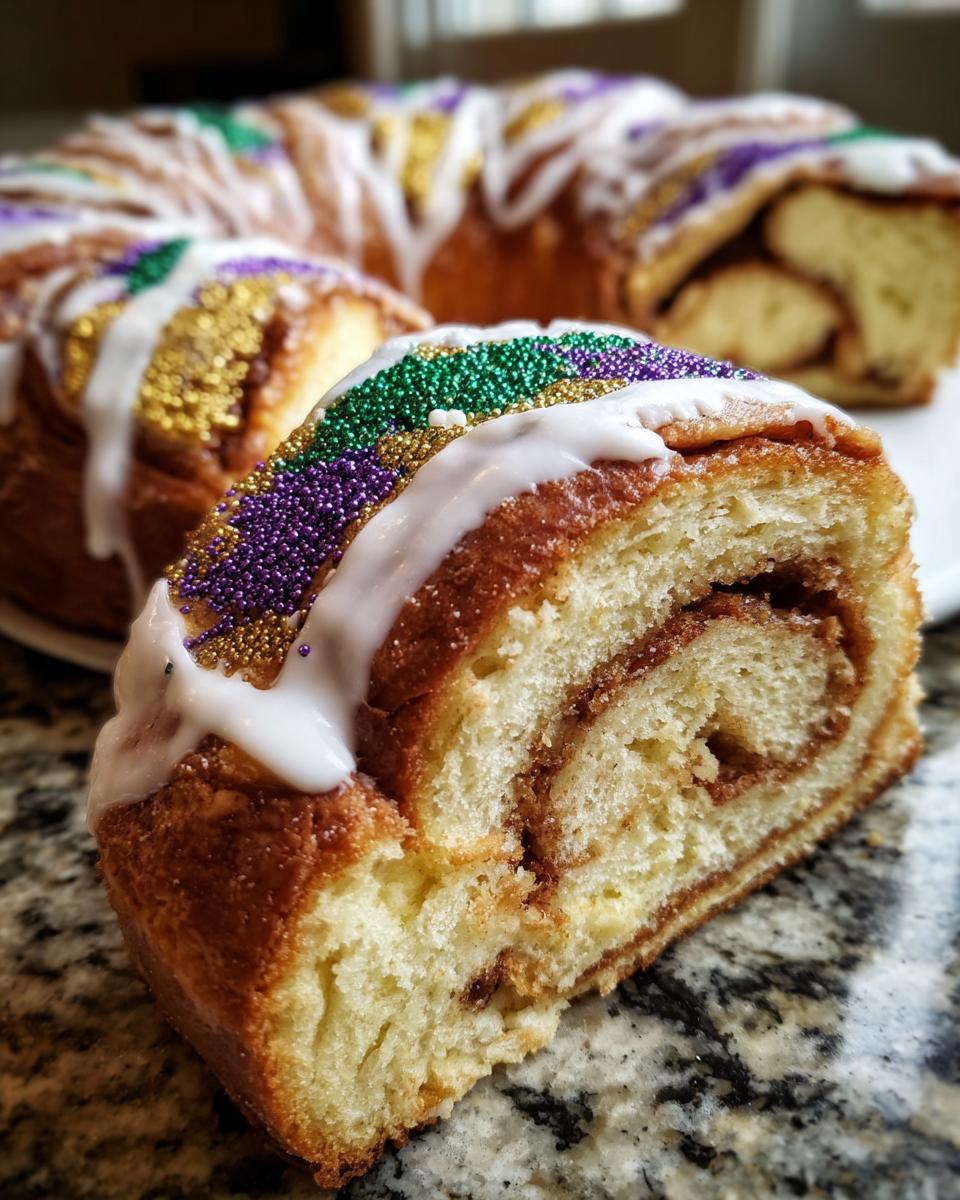
I usually let it cool for five minutes after warming it up gently like that before slicing. It comes out tasting almost as good as it did fresh out of the oven, ready for whoever happened to find the baby last time!
Frequently Asked Questions About the Mardi Gras King Cake
It’s totally normal to have questions when baking something with as much tradition wrapped up in it as this cake! We’ve covered the big steps, but people always ask me the same few things about timing, tradition, and getting that beautiful color scheme just right. Here are the answers to the most common queries I get about making the perfect King Cake.
When should I start baking my King Cake for Mardi Gras season?
This is the fun part about the Carnival season! Tradition says the King Cake season officially kicks off on January 6th, which is Epiphany—the day the Three Kings visited the baby Jesus. However, in New Orleans, most folks start baking and eating them right around the start of the official Mardi Gras parade season, sometimes even right after New Year’s Day! You bake them all the way up until Fat Tuesday (Mardi Gras day itself). So, you’ve got a long, delicious window to practice! If you start now, you’ll have plenty of time to perfect your technique before the big day.
What does the plastic baby in the New Orleans kingcake signify?
Ah, the elusive baby! This is the part that always makes things interesting, right? The tiny plastic baby baked into the New Orleans kingcake symbolizes luck and prosperity, but more importantly, it carries a social obligation! Whoever finds the baby in their slice is considered lucky, but they also inherit the fun duty of hosting the *next* party or perhaps providing the next King Cake. It keeps the celebration and the community sharing going all season long. Just make sure you warn everyone before they take a big bite!
Can I use store-bought icing instead of making this glaze for my purple green gold cake?
Look, I’m all about making things easier sometimes, but for this recipe, I really hope you try my simple glaze. Store-bought icing is usually too thin or too stiff, and it often doesn’t allow those beautiful purple, green, and gold sugars to adhere properly, which is the whole visual point of a real purple green gold cake! My quick glaze is specifically designed to be thick enough to spread but thin enough to drip gorgeously, creating that perfect shell when it sets.
If you absolutely must substitute, look for a thicker royal icing base rather than a standard thin powdered sugar glaze. If you use a pre-made white icing, you might need to warm it *very* slightly, but be careful—it still needs to be thick enough not to run right off the sides before your sanding sugars have a chance to stick!
Estimated Nutritional Data for This King Cake Recipe
Honestly, when you’re celebrating Mardi Gras, you aren’t looking at the calories, right? You’re looking at that beautiful purple, green, and gold sparkle! But, because I believe in providing all the information—even for decadent celebratory bakes—we’ve run the numbers on this soft, delicious yeast cake. This is the closest we can get to a breakdown based on the ingredients listed for one slice.
Keep in mind this is just a starting point. The actual nutrition can change depending on which brand of butter you used or exactly how thick your glaze ended up being. If you’re serving this to a crowd, it’s always best to treat these numbers as an estimate!
- Serving Size: 1 slice
- Calories: 450
- Sugar: 55g (That’s where all the celebration sweetness comes from!)
- Sodium: 250mg
- Fat: 20g
- Saturated Fat: 12g
- Unsaturated Fat: 8g
- Trans Fat: 0.5g
- Carbohydrates: 65g
- Fiber: 2g
- Protein: 7g
- Cholesterol: 70mg
If you’re worried about that sugar content, remember, this is a holiday treat meant for sharing! It’s not an everyday item. Don’t let the numbers stop you from enjoying that amazing cinnamon swirl bread ring flavor. Just slice it small, enjoy the tradition, and share the joy!
Share Your Festive King Cake Creations
Now that you’ve gone through all the rising and kneading, and you’ve successfully hidden that tiny plastic baby inside your glorious Mardi Gras King Cake, I truly want to see what you’ve made! This is the point where baking moves from my kitchen into yours, and that’s the most exciting part for me.
Did the dough rise perfectly for you? Was that cinnamon swirl nice and rich? Or maybe you went with the cream cheese filling and want to rave about it? I need to know!
If this recipe delivered that soft, perfect New Orleans kingcake experience you were looking for, please, please leave it a 5-star rating right here on the page. Those ratings are so important because they help other home cooks who might be doubting themselves—just like I once did—feel confident enough to try baking a beautiful yeast cake for the first time.
And if you snapped a picture of that stunning, colorful ring topped with your purple green gold cake sprinkles, I would absolutely love to see it! Tag us or share your bakes. It makes my day to see my recipes out in the world bringing joy and celebration to your tables.
If you have any specific questions that popped up while you were shaping that ring, or if you want to share the story of who found the baby at your party, you can always reach out directly through the contact page. Happy celebrating, and Laissez les bons temps rouler!
PrintNew Orleans Style King Cake with Cinnamon Swirl
Bake a soft, moist Mardi Gras King Cake featuring a rich cinnamon swirl and a simple glaze with purple, green, and gold sugars. This recipe brings the joy of Carnival right to your kitchen.
- Prep Time: 45 min
- Cook Time: 30 min
- Total Time: 3 hours 45 min
- Yield: 1 large cake (12 servings) 1x
- Category: Dessert
- Method: Baking
- Cuisine: American (New Orleans)
- Diet: Vegetarian
Ingredients
- 1 cup warm milk (about 110°F)
- 2 1/4 teaspoons active dry yeast
- 1/2 cup granulated sugar, divided
- 2 large eggs, room temperature
- 1/4 cup unsalted butter, melted
- 1 teaspoon salt
- 4 cups all-purpose flour, plus more for dusting
- 1/2 cup unsalted butter, softened (for filling)
- 1/2 cup packed light brown sugar (for filling)
- 2 tablespoons ground cinnamon (for filling)
- 1/4 cup heavy cream (for icing)
- 3 cups powdered sugar (for icing)
- 1 teaspoon vanilla extract (for icing)
- Purple, green, and gold sanding sugars (for decorating)
- 1 small plastic baby (for hiding inside)
Instructions
- Activate the yeast: In a large bowl, combine the warm milk, yeast, and 1 teaspoon of the granulated sugar. Let stand for 5 to 10 minutes until foamy.
- Mix the dough: Add the remaining granulated sugar, eggs, melted butter, salt, and half of the flour to the yeast mixture. Mix until combined. Gradually add the remaining flour until a soft dough forms.
- Knead the dough: Turn the dough out onto a lightly floured surface and knead for 8 to 10 minutes until smooth and elastic. Place the dough in a lightly oiled bowl, turning to coat. Cover and let rise in a warm place for 1 to 1.5 hours, or until doubled in size.
- Prepare the filling: While the dough rises, mix the softened butter, brown sugar, and cinnamon together in a small bowl until smooth.
- Shape the cake: Punch down the risen dough. On a lightly floured surface, roll the dough into a large rectangle, about 12×18 inches. Spread the cinnamon filling evenly over the dough, leaving a 1-inch border on one long edge.
- Create the swirl: Tightly roll the dough up lengthwise, starting from the long edge opposite the border. Pinch the seam closed. Gently stretch the dough log until it is about 24 inches long.
- Form the ring: Bring the ends of the dough log together to form an oval or ring shape. Pinch the ends together securely to seal. Place the ring on a baking sheet lined with parchment paper. If hiding the plastic baby, insert it now into the dough.
- Second rise: Cover the cake loosely and let it rise in a warm place for 30 to 45 minutes, or until puffy. Preheat your oven to 375°F (190°C).
- Bake: Bake for 25 to 30 minutes, or until golden brown. If the top begins to brown too quickly, loosely tent with foil. Let the cake cool completely on a wire rack.
- Make the glaze: Whisk together the powdered sugar, heavy cream, and vanilla extract until smooth. Add more cream, a teaspoon at a time, if the glaze is too thick. You want a thick but pourable consistency.
- Decorate: Drizzle the glaze over the cooled cake. Immediately sprinkle generously with purple, green, and gold sanding sugars. Allow the glaze to set before slicing and serving your Mardi Gras King Cake.
Notes
- For a traditional Mardi Gras King Cake, use the colors: purple for justice, green for faith, and gold for power.
- If you prefer a cream cheese filling instead of cinnamon, mix 4 ounces softened cream cheese with 1/4 cup powdered sugar and 1/2 teaspoon vanilla extract, then spread this mixture over the dough before rolling.
- This soft, moist cake relies on room temperature ingredients for the best rise.
Nutrition
- Serving Size: 1 slice
- Calories: 450
- Sugar: 55g
- Sodium: 250mg
- Fat: 20g
- Saturated Fat: 12g
- Unsaturated Fat: 8g
- Trans Fat: 0.5g
- Carbohydrates: 65g
- Fiber: 2g
- Protein: 7g
- Cholesterol: 70mg